Read more!
Sorry, you want to know what I think about Bishop T D Jakes???
1- He's not God and is subject to error. He ERRORED when he suggested that Ruth & Naomi were borderline Lesbians, and that Jonathan and David were nearly homosexual men. Both were egregious misrepresentations of scripture, but I have heard equally as bad representations from many of his critics...
2- In my opinion Bishop has diminished his mission of being a Gospel Preacher in favor of business and liberally centered social justice and the pursuit of dynamic innovative theory. (I write on this in my upcoming book, so stay tuned)

4- Some say he's a gay, pedophile. I DO NOT agree and find no proof or evidence of such. This reminds me of mean spirited evil, and the nature of such an allegation should not be taken lightly and is disturbing considering the lack of effort to display truth, however...I digress...
5- Some will say because he has Oneness roots he has a doctrinal problem...I say his doctrinal problem is no more than John MacArthur's Calvinist, cessationist view and those that follow such false teachings...they are all one in the same and different or varying degrees of error. Yes, I believe cessationism is a DOCTRINE OF DEVILS too!, yet I hear almost noone talking about that at all or doing conferences on the subject, although that would be very easy to do with such false narratives from such allegedly astute individuals..
6- I don't give any credibility to anyone of the world who wants to bring judgement upon someone in the church. They may be correct, but I believe anyone sincere will show their face and not hide behind internet anonymity especially in an age where people take and display videos of rocks, trees and themselves so easily...
With all that said, he may be guilty, and his excuse that if he were guilty all he would have to do is repent, is a fictitious sham...and we can talk about that in the comments, is over the top and many say, telling.
Ultimately, time and GOD will tell...but there is no GOSSIP about it here, and if you want to know the FACTS written about Bishop T D Jakes on this blog over the years, start HERE otherwise, this is not a "tell all" blog and I DO NOT engage in gossip just to be talking and I am not looking for inside information nor trying to create a narrative from someone close to events...PLEASE...I don't have the time or attention...
Blessed!
SPONSOR AD
Critical Illness is real. Often when a Pastoral leader receives an adverse diagnosis, or has a bout or life threatening ordeal, the first level of understanding is often denial. After all we're taught, and many of us believe, that God will "protect" his servants from all sickness, and certainly that he will "heal" his anointed.
But what happens when YOU must walk through the "valley of the shadow" of death and experience your own mortality?
In Philippians 2, Paul references Epaphroditus, who was a faithful ministerial servant along with himself, who suffered sickness "close to death"(v.27), along with himself. In other words, the will and service of God did not insulate this man of God nor Paul from suffering illness and serious sickness.
In light of that, why would we think that any of us are insulated or should be insulated from sickness and illness such as cancer, heart attack and stroke? Further, why do we think that our recitation of the scripture, in absolute terms, cures us by prayers and laying on of hands with 100% healing 100% of the time? Ooh yes, we have FAITH in God and sickness doesn't shake that, but we are human too and all of us will leave this Earth with some sort of scar (sickness and disease).
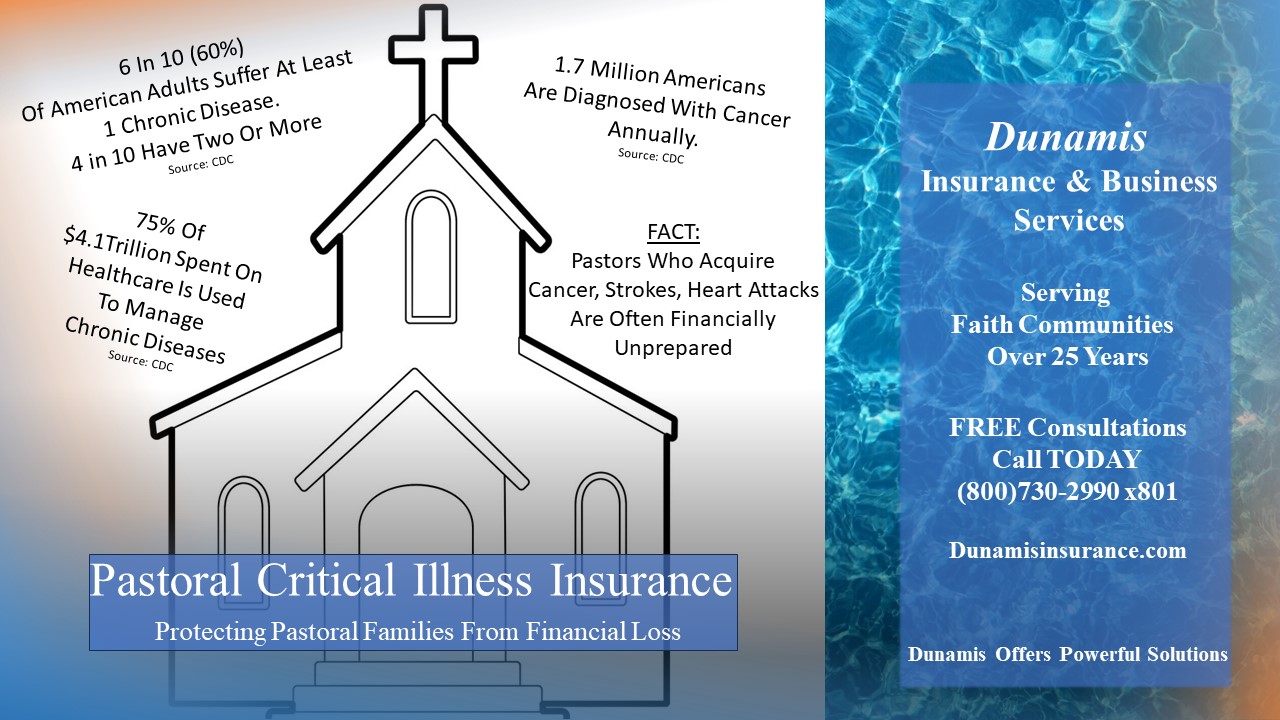
Remember, DUNAMIS offers powerful solutions!
Will be upgrading, expanding and releasing new material in 2024, but AWESOME podcasts are still available. Check them out and become more equipped TODAY!
The last announcement of the 115th Annual Holy Convocation of the Church Of God In Christ, was a very heavy one indeed...
With all honor and respect, Supt. Harvey Burnett, The Dunamis Word & the Saints and Friends Of The New Bethel COGIC yield in humble reverence to the transitioning into glory of Church Of God In Christ General Board Member/ Pastor and Christian leader, Bishop Sedgwick Daniels.
An extraordinary Servant of Christ, we will certainly miss his "COGIC Minute" and we all thank God that we were blessed to share and his his ministry gift. May the Lord forever bless the memory of The Right Reverend Bishop Sedgwick Daniels.

Please Enjoy This Special Video:

The ONLY handbook dealing with life and death within thew world and our church is the Bible itself. It is God that has entrusted HOLY men to carry out biblical edicts and perpetuate godly values. In this, we can thank God for the Late PASTOR DR. JAMES STOVAL of the Bright Star COGIC of Chicago, IL.

Probably my favorite from this year's Convocation so far. It's not the dynamic or theatric of a message that does it for me at my age, it is the content and wisdom of what is said. If there is anything the church needs help and advice with it's marriage and marital relationships. Though things have changed to a degree, honoring one another is always in order and appropriate.
Hear a few minutes of Bishop Walden's opening to his message "The Third Party".


At The Dunamis Word, both print and podcast, Dunamis Insurance & Business Services & all enterprise associated with and related to New Bethel COGIC, we want to be clear that WE DECRY all forms of hate, and in particular at this time JEWISH HATE.
First, Israel IS NOT an occupying presence in the Middle-East. They are a Nation with a history dating back over 4,000 years, who won a right to obtain and possess the land given to them by God. Although we can vigorously debate theology, the fact remains that God has never disinherited his children to adopt us who have come to him through and by the shed blood of Jesus HIS son. As children of adoption, we stand to make it known that we yield to God and not to the world, nor the world's interpretation in this fight.


The facts are that the Hamas terrorism will cost countless innocent lives. Babies, Mothers, Fathers and hosts of innocent people will be murdered, raped and or have been murdered, raped and sold into slavery as a result of this senseless and well coordinated attack. From reports the first thing that these alleged terrorists did was go to a freedom party full of unarmed people and begin to shoot women and unarmed men. Remember, these are the "freedom fighters"...That's what they will tell you anyway. All this with these liberal Black elites in tow, telling the Black community they should support, death murder and mayhem.
In my opinion, these people are vile and used of satan! In fact, neither Hamas nor the Palestinian struggle have nothing to do with Black people or being Black or the struggle for equality, but along with their cohorts and seducers, these elites and Boule Blacks are quick to encourage the Black community to support what amounts to garbage ideology and more trouble.
Don't Get Confused
Be clear, the fight for freedom is noble. However, many of these leaders such as the late Yasser Arafat formerly of the PLO (Palestinian Liberation Organization) did more to accomplish that than many leaders to date and much of the progress made under his leadership has been set back by continued hate, beginning with the failure to recognize the legitimate Jewish state and war upon Israel by killing innocent men, women and children and by rockets fired into Israeli territory daily.
Back To The Show...
“You know all those loud mouthed bags of human feces, a.k.a. the Jewish White Supremacists; when we liberate Palestine and they have to go back to where they come from, they will return to being low voiced bitches of thier (sic) Christian/Secular White Supremacist Masters,”
Now, these people have their own experiences and I certainly don't put them down for that. However, what I do condemn, is anyone's encouragement and excitement for violence and violent acts and actions. Both of these educated men, whom I will gladly call senseless loons, know that while they are in the comforts of their homes and living in finery, that many innocent, both Jewish and Philistine are dying, being displaced, held hostage, raped, beaten, humiliated and everything evil, and instead of using their platforms to drive real solutions, reforms and change, they become giddy, even joyous, prophesying Israel's destruction and the "liberation" of a people who are more oppressed by the terrorists groups usurping authority over them while continuing to destroy a legitimate Jewish state.
I feel sorry for the people who don't know God and who discount the Bible, not only as the word of God, but also as a book of history. They may be left with information, some which may or may not be accurate, but they are totally left without reason and or purpose. I will provide some of the purpose behind why we see what we see now in order to dispell some myths and clarify the situation.
Their land was the Southwest side of the Canaanite territory near the sea. Since the Canaanite was a general reference to multiple family and tribal groups, let's stay in Genesis 10 to see what the vastness and borders of the Canaanite land was:
Gen. 10:19 ~ 19-And the border of the Canaanites was from Sidon, as thou comest to Gerar, unto Gaza; as thou goest, unto Sodom, and Gomorrah, and Admah, and Zeboim, even unto Lasha.
What it is clear to see is that the land of Canaan was extensive and went down to and included Gaza where the Philistines would settle. This region was known as Philistia, would go on to be called Palestinia, and ultimately and eventually Palestine. What was once a state and nation, God began to parce to Israel because of sin and disobedience, as I will display. In short the name Palestine, and Palestinia, became a description of a territory, not the description of a government or state...
When Abraham was called out of the Mesopotamian region of modern day Iran/Iraq, he was told to go and wherever he would walk and tread God would give him and his seed that land for a covenant.
Gen. 12:6-9 ~ 6-And Abram passed through the land unto the place of Sichem, unto the plain of Moreh. And the Canaanite was then in the land. 7-And the LORD appeared unto Abram, and said, Unto thy seed will I give this land: and there builded he an altar unto the LORD, who appeared unto him. 8-And he removed from thence unto a mountain on the east of Bethel, and pitched his tent, having Bethel on the west, and Hai on the east: and there he builded an altar unto the LORD, and called upon the name of the LORD. 9-And Abram journeyed, going on still toward the south.Later, God would make and seal, by his own actions, a direct Covenant with Abram with the promise of land and territory as an objective. This is a description
Gen. 15:18-19 ~ 18-In the same day the LORD made a covenant with Abram, saying, Unto thy seed have I given this land, from the river of Egypt unto the great river, the river Euphrates: 19-The Kenites, and the Kenizzites, and the Kadmonites, 20-And the Hittites, and the Perizzites, and the Rephaims, 21-And the Amorites, and the Canaanites, and the Girgashites, and the Jebusites.
The promise what that God would give Abram, the Grandfather of Jacob (Israel) a land "flowing with milk and honey" as he affirmed to Moses, that land would include the land of Canaan:
Ex. 3:8 ~ And I am come down to deliver them out of the hand of the Egyptians, and to bring them up out of that land unto a good land and a large, unto a land flowing with milk and honey; unto the place of the Canaanites, and the Hittites, and the Amorites, and the Perizzites, and the Hivites, and the Jebusites.Why This Land?
Gen. 25:33 ~ And Jacob said, Swear to me this day; and he sware unto him: and he sold his birthright unto Jacob.This was not just something done, or something that was not serious. The writer of Hebrews says that the sale of the birthright was a vile and profane act:
Heb. 12: 16 ~ Lest there be any fornicator, or profane person, as Esau, who for one morsel of meat sold his birthright.
Lev. 18:24 -30 ~ 24-Defile not ye yourselves in any of these things: for in all these the nations are defiled which I cast out before you: 25-And the land is defiled: therefore I do visit the iniquity thereof upon it, and the land itself vomiteth out her inhabitants. 26-Ye shall therefore keep my statutes and my judgments, and shall not commit any of these abominations; neither any of your own nation, nor any stranger that sojourneth among you: 27-(For all these abominations have the men of the land done, which were before you, and the land is defiled;) 28-That the land spue not you out also, when ye defile it, as it spued out the nations that were before you. 29-For whosoever shall commit any of these abominations, even the souls that commit them shall be cut off from among their people. 30-Therefore shall ye keep mine ordinance, that ye commit not any one of these abominable customs, which were committed before you, and that ye defile not yourselves therein: I am the LORD your God.
The people of Canaan including those of Philistia (Philistines or Palestine) had 650 years to repent, but did not do so. In fact they were a primary antagonist to God's people Israel as they moved into the land and received the inheritance God promised.
Conclusion
Ezek. 39: 25-29 ~ 25-Therefore thus saith the Lord GOD; Now will I bring again the captivity of Jacob, and have mercy upon the whole house of Israel, and will be jealous for my holy name; 26-After that they have borne their shame, and all their trespasses whereby they have trespassed against me, when they dwelt safely in their land, and none made them afraid. 27-When I have brought them again from the people, and gathered them out of their enemies' lands, and am sanctified in them in the sight of many nations; 28-Then shall they know that I am the LORD their God, which caused them to be led into captivity among the heathen: but I have gathered them unto their own land, and have left none of them any more there. 29-Neither will I hide my face any more from them: for I have poured out my spirit upon the house of Israel, saith the Lord GOD.
BLESSED!

Did you see the Senate hearing this week...All the liberals singing the song that they decry censorship, (MORE LIES)... Many of the same ones blocked, cast out and colluded with media, companies such as Google and Twitter and Facebook, to silence dissent and CENSOR opposing views when it came to covid. They blocked licensed medical professionals certifications and hunted down every dissenting voice, even people that wrote the books that they were reading on infectious disease. They were horrible and remain to be so, and this is my opinion, THE SCUM OF THE EARTH! Them and all their hypocritical minions (Don't sound like a preacher to you? Well obviously you haven't read the bible and heard what Jesus said about many, vipers, devils, hypocrites, sons of hell, etc...Well these folk are all that and then some!)
"The Harm Caused by Masks
A new study suggests that the excess carbon dioxide breathed in by mask-wearers can have major health consequences.
"While eight times the normal level of carbon dioxide is toxic, research suggests that mask-wearers (specifically those who wear masks for more than 5 minutes at a time) are breathing in 35 to 80 times normal levels.Mask-wearers breathe in greater amounts of air that should have been expelled from their bodies and released out into the open. “[A] significant rise in carbon dioxide occurring while wearing a mask is scientifically proven in many studies,” write the German authors. “Fresh air has around 0.04% CO2,” they observe, while chronic exposure at CO2 levels of 0.3 percent is “toxic.” How much CO2 do mask-wearers breathe in? The authors write that “masks bear a possible chronic exposure to low level carbon dioxide of 1.41–3.2% CO2 of the inhaled air in reliable human experiments.What can breathing too much carbon dioxide do to you? The authors write that “at levels between 0.05% and 0.5% CO2,” one might experience an “increased heart rate, increased blood pressure and overall increased circulation with the symptoms of headache, fatigue, difficulty concentrating, dizziness, rhinitis, and dry cough.” Rates above 0.5 percent can lead to “reduced cognitive performance, impaired decision-making and reduced speed of cognitive solutions.” Beyond 1 percent, “the harmful effects include respiratory acidosis, metabolic stress, increased blood flow and decreased exercise tolerance.” Again, mask-wearers are likely breathing in CO2 levels between 1.4 percent and 3.2 percent—well above any of these thresholds. What’s more, “Testes metabolism and cell respiration have been shown to be inhibited increasingly by rising levels of CO2.
So, high blood pressure, reduced thinking ability, respiratory problems, and reproductive concerns are among the many possible results of effectively poisoning oneself by breathing in too much carbon dioxide.The authors write that “it is clear that carbon dioxide rebreathing, especially when using N95 masks, is above the 0.8% CO2 limit set by the US Navy to reduce the risk of stillbirths and birth defects on submarines with female personnel who may be pregnant.” In other words, mandates have forced pregnant women to wear masks resulting in levels of CO2 inhalation that would be prohibited if they were serving on a Navy submarine.Indeed, according to the authors, there exists “circumstantial evidence that popular mask use may be related to current observations of a significant rise of 28% to 33% in stillbirths worldwide and a reduced verbal, motor, and overall cognitive performance of two full standard deviations in scores in children born during the pandemic.”They cite recent data from Australia, which “shows that lockdown restrictions and other measures (including masks that have been mandatory in Australia), in the absence of high rates of COVID-19 disease, were associated with a significant increase in stillborn births.” Meantime, “no increased risk of stillbirths was observed in Sweden,” which famously defied the public-health cabal and went its own way in setting Covid policies."
~ Mr. Robin Monotti
https://twitter.com/robinmonotti/status/1701585754500341760?t=wTOzle_DYV4Ud1iqz15Pcg&s=19
I invite ALL youth ages 12 to 19 to complete the enclosed survey. This says "Peoria" however, no matter where you live, please have your young person(s) complete. Simply enter your current zip code.
Please only 1 survey per person, so that our evaluations can be accurate and remember, it is anonymous and there are no right or wrong answers. We want a youth perspective on violence, violence activities and how it may or may not have effected them. Thank you and Blessed!
MAY GOD BLESS AND KEEP YOU!

I don't know why, but in the last 3 months this blog has garnered over 250,000 page reads from Ukrainian citizens.
First, I would like to say, I AND WE ARE PRAYING FOR YOU. Even though this dreaded war is on American TV news regularly, I personally have no clue as to what you are experiencing or going through. I can only pray for your peace and safety and for the threat and reality of war to disappear and go away forever. No father, mother or child should have to endure such terror and do it perpetually...It seems that those who could end this complete fiasco and terror could also end it as immediately IF they only had a human heart.

“Promising to eradicate Polio with $1.2 billion, Gates took control of India ‘s National Advisory Board (NAB) and mandated 50 polio vaccines (up from 5) to every child before age 5. Indian doctors blame the Gates campaign for a devastating vaccine-strain polio epidemic that paralyzed 496,000 children between 2000 and 2017.
In 2017, the Indian Government dialed back Gates’ vaccine regimen and evicted Gates and his cronies from the NAB. Polio paralysis rates dropped precipitously. In 2017, the World Health Organization reluctantly admitted that the global polio explosion is predominantly vaccine strain, meaning it is coming from Gates’ Vaccine Program. The most frightening epidemics in Congo, the Philippines, and Afghanistan are all linked to Gates’ vaccines. By 2018, ¾ of global polio cases were from Gates’ vaccines.In 2014, the Gates Foundation funded tests of experimental HPV vaccines, developed by GSK and Merck, on 23,000 young girls in remote Indian provinces. Approximately 1,200 suffered severe side effects, including autoimmune and fertility disorders. Seven died. Indian government investigations charged that Gates funded researchers committed pervasive ethical violations: pressuring vulnerable village girls into the trial, bullying parents, forging consent forms, and refusing medical care to the injured girls. The case is now in the country’s Supreme Court. In 2010, the Gates Foundation funded a trial of a GSK’s experimental malaria vaccine, killing 151 African infants and causing serious adverse effects including paralysis, seizure, and febrile convulsions to 1,048 of the 5,049 children. During Gates 2002 MenAfriVac Campaign in Sub-Saharan Africa, Gates operatives forcibly vaccinated thousands of African children against meningitis. Between 50-500 children developed paralysis. South African newspapers complained, "We are guinea pigs for drug makers" Nelson Mandela's former Senior Economist, Professor Patrick Bond, describes Gates' philanthropic practice's as "ruthless" and immoral". In 2010, Gates committed $ 10 billion to the WHO promising to reduce population, in part, through new vaccines. A month later Gates told a Ted Talk that new vaccines "could reduce population". In 2014, Kenya's Catholic Doctors Association accused the WHO of chemically sterilizing millions of unwilling Kenyan women with a phony "tetanus" vaccine campaign. Independent labs found the sterility formula in every vaccine tested. After denying the charges, WHO finally admitted it had been developing the sterility vaccines for over a decade. Similar accusations came from Tanzania, Nicaragua, Mexico and the Philippines.A 2017 study (Morgensen et.Al.2017) showed that WHO's popular DTP is killing more African than the disease it pretends to prevent. Vaccinated girls suffered 10x the death rate of unvaccinated children.Gates and the WHO refused to recall the lethal vaccine which WHO forces upon millions of African children annually.Global public health advocates around the world accuse Gates of - hijacking WHO's agenda away from the projects that are proven to curb infectious diseases; clean water, hygiene, nutrition and economic development. They say he has diverted agency resources to serve his personal fetish - that good health only comes in a syringe.In addition to using his philanthropy to control WHO, UNICEF, GAVI and PATH, Gates funds private pharmaceutical companies that manufacture vaccines, and a massive network of pharmaceutical -industry front groups that broadcast deceptive propaganda, develop fraudulent studies, conduct surveillance and psychological operations against vaccine hesitancy and use Gates' power and money to silence dissent and coerce compliance."